Diwali — Lakshmi Puja
The festival of lights — the great Amavasya night when Rama returned to Ayodhya, Lakshmi is worshipped as the bringer of prosperity, Mahavira attained nirvana, and Kali danced in the cremation ground.
Read along this Diwali — Lakshmi Puja
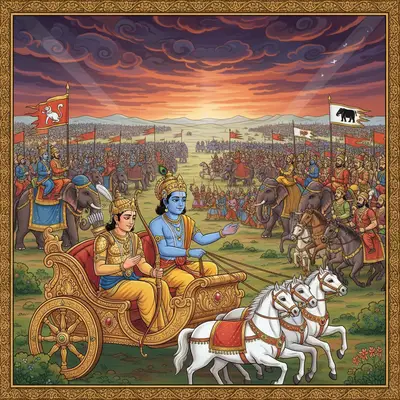
The Mahabharata: A Saga of Dharma and Conflict
An Epic Journey into Duty, Destiny, and the Kurukshetra War
Panchang
Scripture-anchored today
01○ COMING SOONRama Returns to Ayodhya
Valmiki Ramayana, Yuddha Kanda 128; Uttara Kanda 1–5▾
Rama Returns to Ayodhya
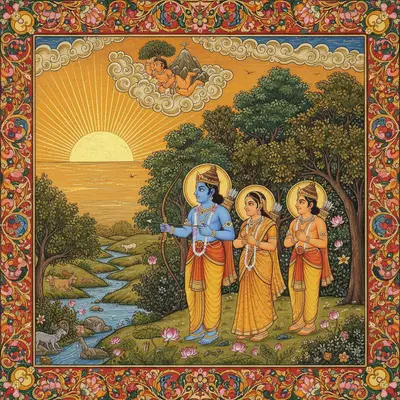
After fourteen years of exile and the war with Ravana, Rama, Sita, and Lakshmana fly back to Ayodhya in the Pushpaka Vimana. The city, which has been in mourning with dimmed lamps for fourteen years, lights row upon row of oil lamps (deepavali) to welcome them. The moral weight of the day: the victory of dharma over adharma, the return of the rightful king, and the joy of a people whose long wait is over. Why we light lamps on this Amavasya — to dispel the darkness of those fourteen years, and every darkness that still lingers in us.
02○ COMING SOONLakshmi Emerges — Goddess of Prosperity
Bhagavata Purana 8.8; Vishnu Purana 1.9; Padma Purana, Uttara Khanda 124▾
Lakshmi Emerges — Goddess of Prosperity
During the great churning of the cosmic ocean (Samudra Manthan), when the devas and asuras together churned the milk-sea, fourteen treasures emerged — and among them, the goddess Lakshmi herself, radiant on a lotus. She chose Vishnu as her eternal consort. On Kartika Amavasya, homes are lit with lamps to invite her presence — for tradition says Lakshmi walks the earth this night and enters the dwellings that have prepared for her: clean, illuminated, and devoted. The theology of the evening: prosperity (Lakshmi) is not earned but received; dharma prepares the vessel, grace fills it.
03○ COMING SOONKrishna Slays Narakasura
Bhagavata Purana 10.59; Harivamsha, Vishnu Parva 91–92▾
Krishna Slays Narakasura
The demon Narakasura, son of earth-goddess Bhumi, had imprisoned sixteen thousand princesses and terrorized the three worlds. Krishna, riding Garuda with his wife Satyabhama, besieged Pragjyotishapura. When Satyabhama's arrow finally felled Narakasura — fulfilling an old prophecy that only his mother could kill him, as Satyabhama was Bhumi's incarnation — the captive women were freed. Krishna married them all, restoring their dignity in a society that would have rejected them. The five-day Diwali celebrations begin with this victory on the preceding Chaturdashi, and Amavasya night celebrates the world restored.
04○ COMING SOONMahavira Attains Nirvana
Kalpa Sutra (Jain Agama); Uttaradhyayana Sutra 36▾
Mahavira Attains Nirvana
At Pavapuri in Magadha, on the night of Kartika Amavasya (527 BCE by Jain reckoning), the twenty-fourth Tirthankara, Mahavira Swami, attained moksha after his final sermon. The gods and kings present lit lamps in his honour — 'since the light of knowledge has left us, let us make lights.' The Jain tradition of Diwali as the day of Mahavira's liberation is as old as the Vaishnava tradition of Rama's return — two great threads of Indian dharma meeting on the same tithi. Include why Jain Diwali lamps mark not victory but the beginning of enlightened absence.
05○ COMING SOONKali Dances in the Cremation Ground
Devi Bhagavata Purana 7.28–7.31; Mahabhagavata Purana 8–9; Kalika Purana▾
Kali Dances in the Cremation Ground
When the demons Shumbha and Nishumbha threatened the devas, Durga summoned her darkest form — Kali — from her own forehead. Kali emerged black as the void, garlanded with skulls, tongue blood-stained, and danced across the battlefield annihilating every asura. When her dance did not stop, Shiva himself lay beneath her feet to absorb the tremor. Bengal and Assam worship Kali on the Kartika Amavasya night, not as a frightening goddess but as the Mother who destroys ego, time, and all that binds the soul. The theological depth: the same day when Lakshmi brings light, Kali dissolves the illusions that obscure it.
06○ COMING SOONBandi Chhor Divas — The Liberation of Guru Hargobind
Sikh Itihas; Bhai Gurdas Var 24; Sri Gur Pratap Suraj Granth▾
Bandi Chhor Divas — The Liberation of Guru Hargobind
In 1619, the sixth Sikh Guru, Guru Hargobind Sahib, was released from imprisonment at Gwalior Fort by Emperor Jahangir — but only on the condition that he came out alone. Guru Ji refused, insisting that the fifty-two Hindu kings imprisoned alongside him be freed too. The emperor agreed with a trick: only those who could hold the Guru's cloak could leave. Guru Hargobind had a cloak sewn with fifty-two tassels; every king held one and walked out with him. When he reached Amritsar, the Harmandir Sahib was lit with lamps to welcome him — the Sikh origin of Bandi Chhor Divas ('Day of Liberation'), observed on the same Amavasya as Diwali. A story of principled leadership and the inseparability of personal freedom from collective justice.
07○ COMING SOONMahabharata War Begins
Mahabharata, Not specified▾
Mahabharata War Begins
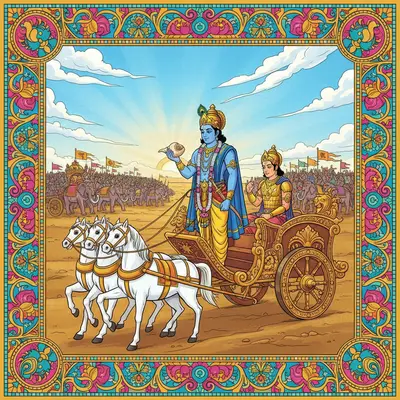
Scholarly research, based on astronomical and calendrical evidence within the Mahabharata text, suggests that the Kurukshetra War commenced on Kartika Amavasya. This interpretation relies on analyzing numerous internal descriptions of lunar phases, planetary positions, and seasonal indicators throughout the 18-day war. The commencement of this epic conflict on this specific tithi marks a pivotal moment in the Itihasa.
Each event is scripturally dated to this tithi, not the Gregorian date, so these stories recur every lunar year.
On this calendar date
Bharat
No events recorded for Bharat on this date.
World
- 2022
- 2010
- 2001
- 1950
- 1944
- 1944
Historical events via Wikipedia · On this day
Wake up to today's tithi + a story.
Panchang, festivals and scripture-anchored stories in your inbox each morning. Free, unsubscribe anytime.